How to get started making wine at home
If you like drinking wine, making wine at home may sound like an exciting challenge. Making wine is a complex process. There are a lot of steps required to produce a good bottle of wine at home. The quality of equipment, the area it’s produced, and the environment where you store the wine are all crucial. These are just a few of the variables that will determine how enjoyable your homemade wine is.
Perhaps the most important factor, as we've learned through our interviews with professional winemakers, is the quality of the grapes you use. Getting access to top-quality grapes is almost impossible for anyone making wine at home. The best vineyards have long-term contracts with established wineries and winemakers. But we want you to stay positive. Even with second-tier grapes, you can produce enjoyable wine.
Many of the winemakers we interview started out making wine at home and they were able to produce nice wines that allowed them to get established.
So even without premier fruit, you can succeed in making your own wine at home! Your success will be based on doing enough research, giving maximum effort, and buying the right materials. You might not be able to compete with top bottles from established wineries in Napa Valley or Bordeaux, but you’ll certainly be able to produce something you can be proud of. The goal of making a nice homemade wine to enjoy together with friends or family is realistic.
We hope this short guide to the equipment you need to make wine will help get you started on the right path. We want you to succeed. Making wine at home can be highly rewarding and even lead to a new career path!
[note] This post about how to make wine at home contains affiliate links, which means that if you click on one of the product links and decide you love what they have to offer, we will be compensated.
What Equipment Do You Need To Buy For Home Winemaking?
First off, know that you need to make an investment in equipment and grapes/juice to get started. Do not skimp on equipment. Making the proper investment now will give you the best chance of making wine that is worth sharing. We want your efforts to lead to success!
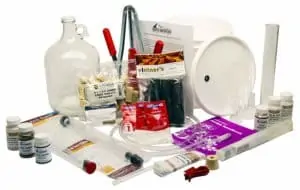
As far as your equipment goes, doing a bit of research can help, but generally buying some of the better-rated wine-making kits will cover your needs. Most kits at least include gallon units, a fermenter, a thermometer, a hydrometer, a sterilizer, and lids (preferably with an airlock).
Checklist Of Home Winemaking Equipment To Purchase
To save yourself time, you can purchase a high-quality winemaking kit. This is a great way to start. If you are really committed to the process, here is a list of what you need to get started.
Click on the links to order or see current prices.
- Fruit Crusher
- Press
- Sanitizers, such as Star San
- Nylon straining bag
- Yeast
- 7.9 Gallon plastic fermenter with lid
- Siphon tubing
- Racking Cane
- Glass carboy* with a stopper and airlock
- Hydrometer and test jar
- Sulfiter/bottle rinser
- Bottling bucket
- Refractometer
- Bottles
- Corks
- Corker
If you decide you going to purchase juice instead of starting with grapes, you can eliminate some of the equipment above. This can speed up the process, but also takes some of the fun out of the process!
What Do I Do?
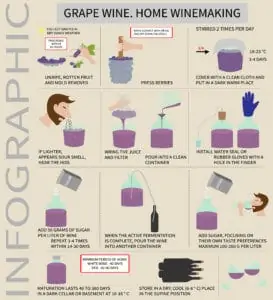 There are many great books with detailed instructions on winemaking. We suggest you invest in a good one. This will help supplement the instructions that come with the home winemaking kit you buy or can act as your primary guide if you aren't purchasing a winemaking kit. Here is a book on winemaking we really like The Home Winemakers Companion. Click here to see it.
If you learn better by watching, you can find a great winemaking video course by clicking here.
If you are more of a visual learner, you can check out some of the step-by-step home winemaking guides that are posted on sites like Youtube. There is a link to one of these videos at the bottom of our guide.
One important lesson for first-time home winemakers is to stick to the instructions as closely as possible. Making wine may be an art, but it is also a science. You may remember how important it is to follow clear processes when mixing chemicals. If you don't, they can blow up in your face! The wine you are making at home isn't going to blow up in your face, but not following the exact steps can lead to something just as traumatic. Veteran winemakers can ad-lib a little, novice winemakers should stick to the plan.
If you’re a bit more ambitious and choose to even grow your own ingredients, looking up how the experts do it is simply a must. As you’ve probably realized by now, research is vital here, so don’t let your efforts and money go to waste because you didn't put your time into proper research and learning.
Things to Remember
Let’s go over some of the things to keep in mind while making wine. First up, it’s extremely important to be sure that all of your equipment is clean and sterilized. This is to prevent your wine from going bad and turning into something that tastes and smells like vinegar or worse. Proper attention to cleanliness will help you avoid this.
Secondly, you’ll need a proper place for storage. Preferably a space separated from the rest of your home. Having a controlled climate is crucial, try to go for an area that’s cold and dark for the best results. Once that’s checked off the list, you won’t have to worry about your wine getting heated and spoiled prematurely during the summer.
Finally, remember to give your wine time to mature. In essence, you can drink it as soon as it’s done but it’s recommended to age it at least four weeks. This will give it time to both ferment and clear. Any longer can only improve the flavor profile of your wine, as it benefits greatly from aging!
And with that, we’ve come to an end to this quick guide! Assuming you’ve made it this far, you should now have a better idea about what’s needed for starting out and where to purchase your home winemaking equipment. Again, taking the time to do a little research on your own is essential. Wine-making is a complex craft at the end of the day. Take your time and have fun. Your home winemaking experience can change your life.
A Home Winemaking Video To Inspire You